Guide walkthrough
Start reading here
This is the main article body, where the page shifts from summary cards into the actual workflow and decision-making notes.
On this page
Key terms for this guide
These glossary pages cover the ideas and platform language most likely to matter as you work through this guide.
Start with the question the line is supposed to answer
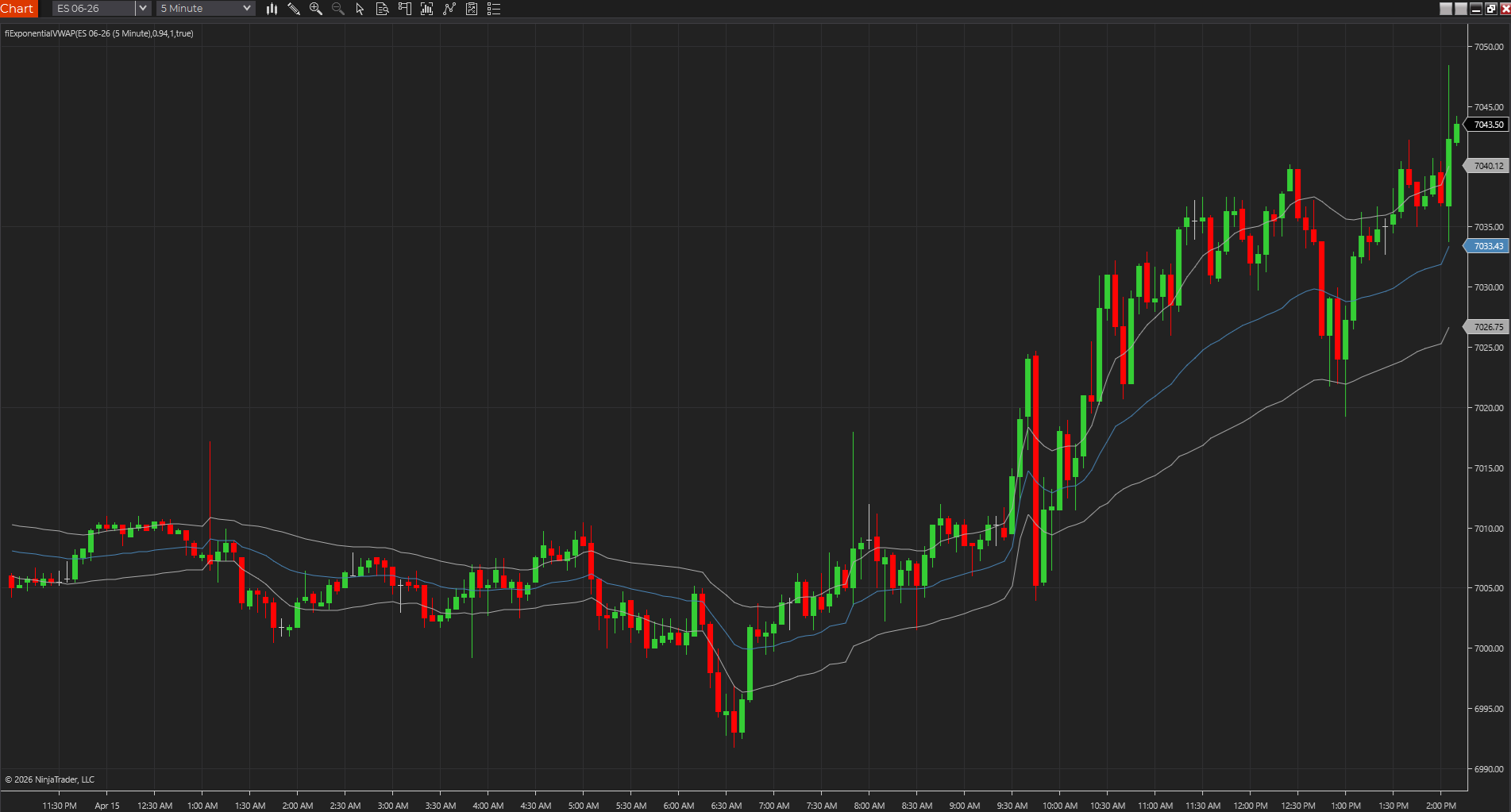
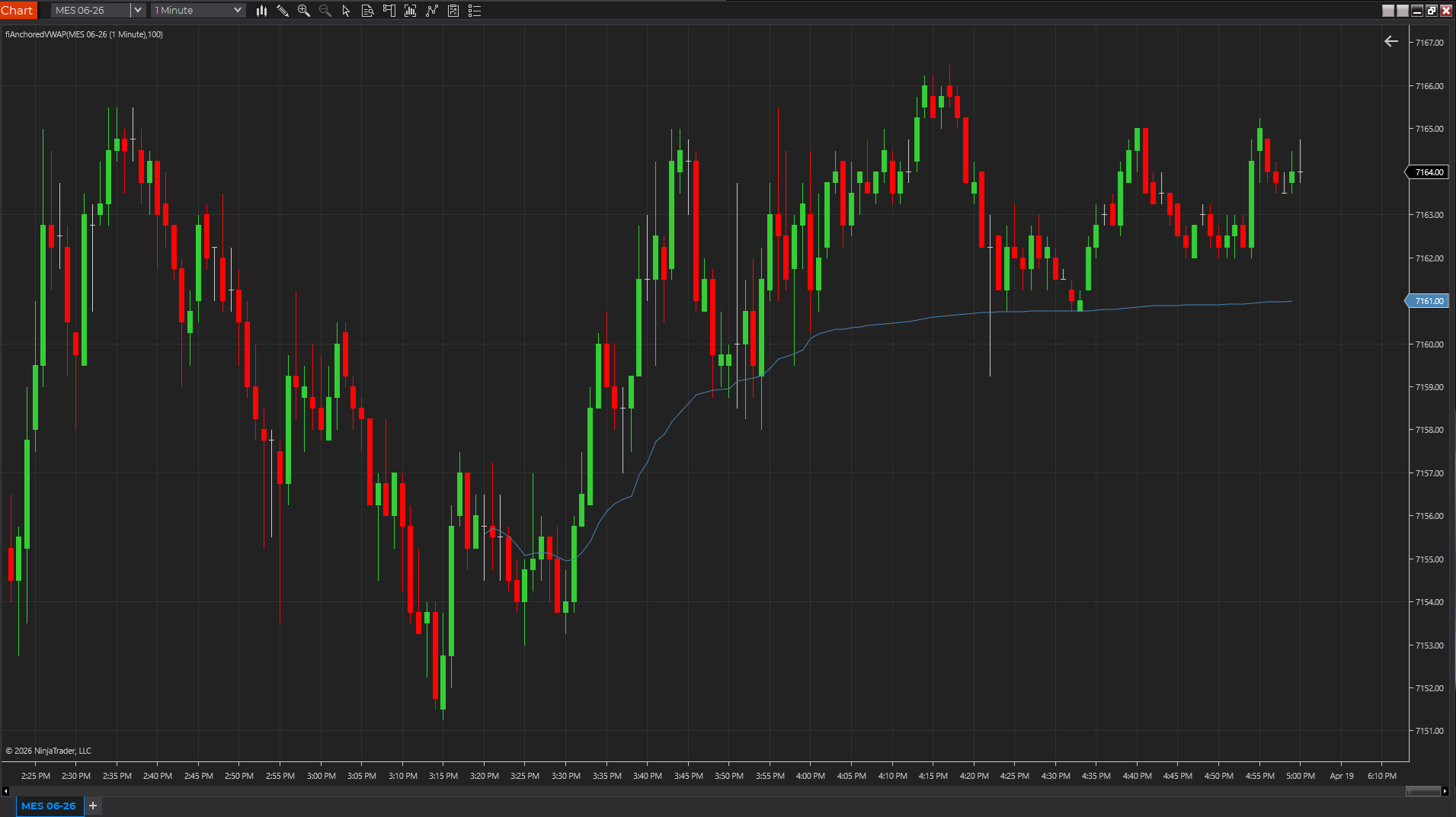
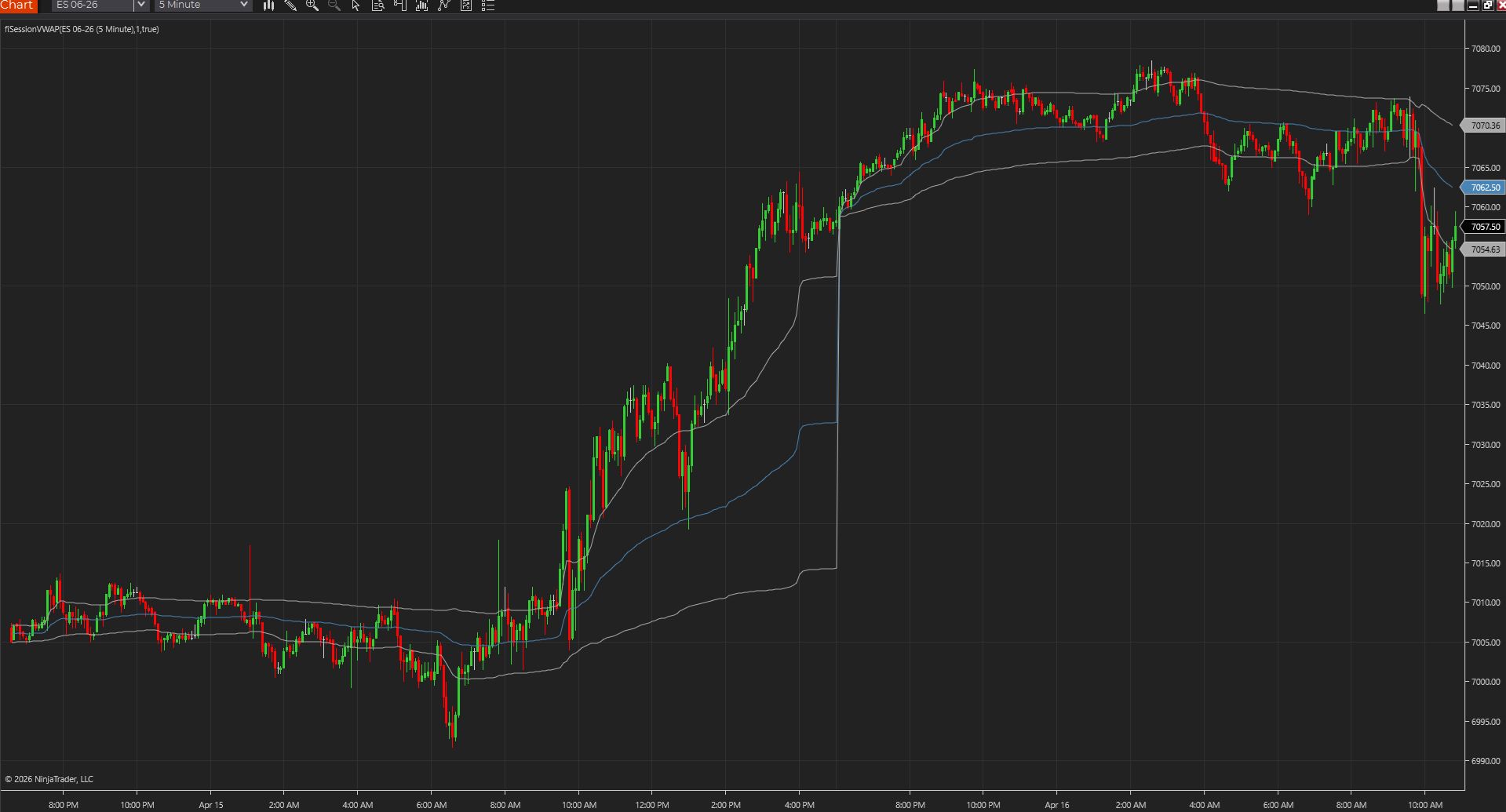
For futures traders, session VWAP and anchored VWAP are not really rivals. They answer different questions. Session VWAP asks where fair value sits during the current session. Anchored VWAP asks how price is behaving from a specific event, swing, or news point.
- If the session itself is the frame, session VWAP is usually cleaner.
- If a gap, CPI release, overnight swing, or trend-leg start is the frame, anchored VWAP usually makes more sense.
- Choosing the wrong frame is what makes the chart feel confusing.
Session VWAP is stronger for normal intraday orientation
When the regular trading session is the main story, session VWAP usually gives the cleanest futures read. It helps show whether price is trading above, below, or rotating around the session's weighted value.
- This is useful for fair-value reclaims, trend persistence, and session balance.
- It tends to travel well across the whole intraday session.
- It is usually the better first VWAP reference for day traders.
Anchored VWAP is stronger when the event matters more than the whole day
Anchored VWAP becomes more useful when one event or swing matters more than the session reset. Futures traders often care about that after large gaps, major economic releases, or obvious trend pivots.
- A meaningful anchor point can reveal whether price is holding above or below the move that started the current story.
- That can be more informative than a session reset line on unusual days.
- Anchored VWAP is usually strongest when the anchor choice is obvious and defensible.
Do not force both lines onto the chart by default
Many traders add both session VWAP and anchored VWAP automatically, then wonder why the chart feels crowded. Use both only when they answer separate questions cleanly enough to justify the extra visual load.
- If both lines are on the chart, each should represent a distinct frame.
- If they create more explanation than clarity, simplify.
- A good futures chart usually keeps the answer visible without a long interpretation process.
Pair the chosen VWAP with location and participation
Whether you choose session VWAP or anchored VWAP, the line becomes more useful when it interacts with opening range, session levels, prior highs and lows, or volume confirmation. VWAP context is strongest when it is not alone.
- A VWAP reclaim near prior-session support means more than a reclaim in empty space.
- A failure at anchored VWAP during weak participation is a different story from one supported by strong volume.
- This is why VWAP pages should connect cleanly to level and participation guides.
Best next reads
These pages pick up the questions most readers usually have next, so you do not have to back out and start a fresh search.
Frequently asked questions
What is the main difference between session VWAP and anchored VWAP for futures traders?
Session VWAP resets with the session and is best for intraday fair-value context, while anchored VWAP starts from a specific event or swing and is best when that event matters more than the session reset.
Should futures traders put both session VWAP and anchored VWAP on every chart?
Usually no. Use both only when they answer clearly different questions; otherwise the chart often becomes harder to read.
When is anchored VWAP more useful than session VWAP?
After meaningful gaps, major news events, or obvious swing pivots where the event itself is more important than the standard session frame.