Guide walkthrough
Start reading here
This is the main article body, where the page shifts from summary cards into the actual workflow and decision-making notes.
On this page
Key terms for this guide
These glossary pages cover the ideas and platform language most likely to matter as you work through this guide.
Gap levels and prior-session levels frame different opening questions
For futures traders, gap levels explain how the market separated from the prior close. Prior-session levels explain where the previous auction actually printed important prices. Both matter, but they do different jobs.
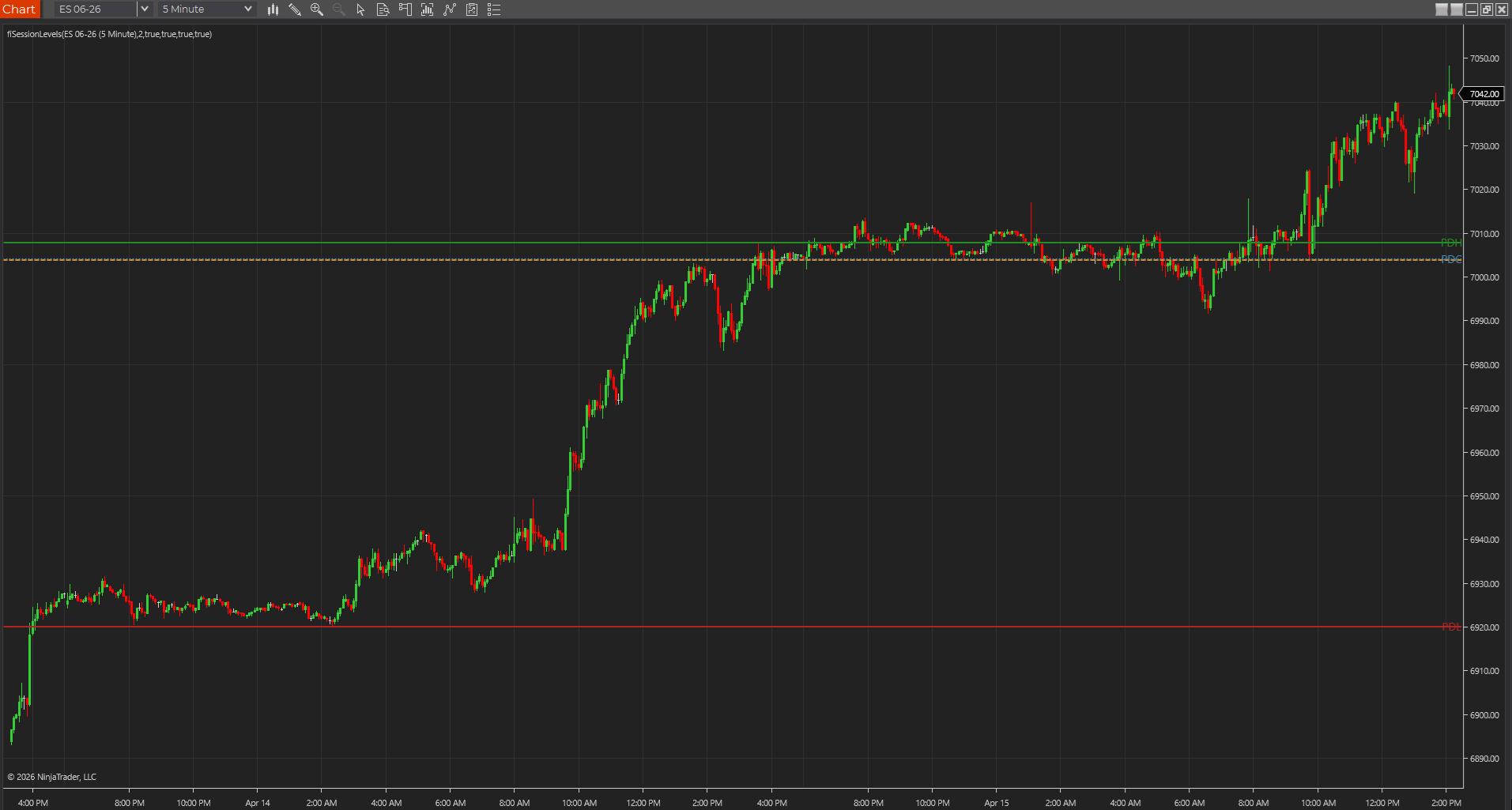
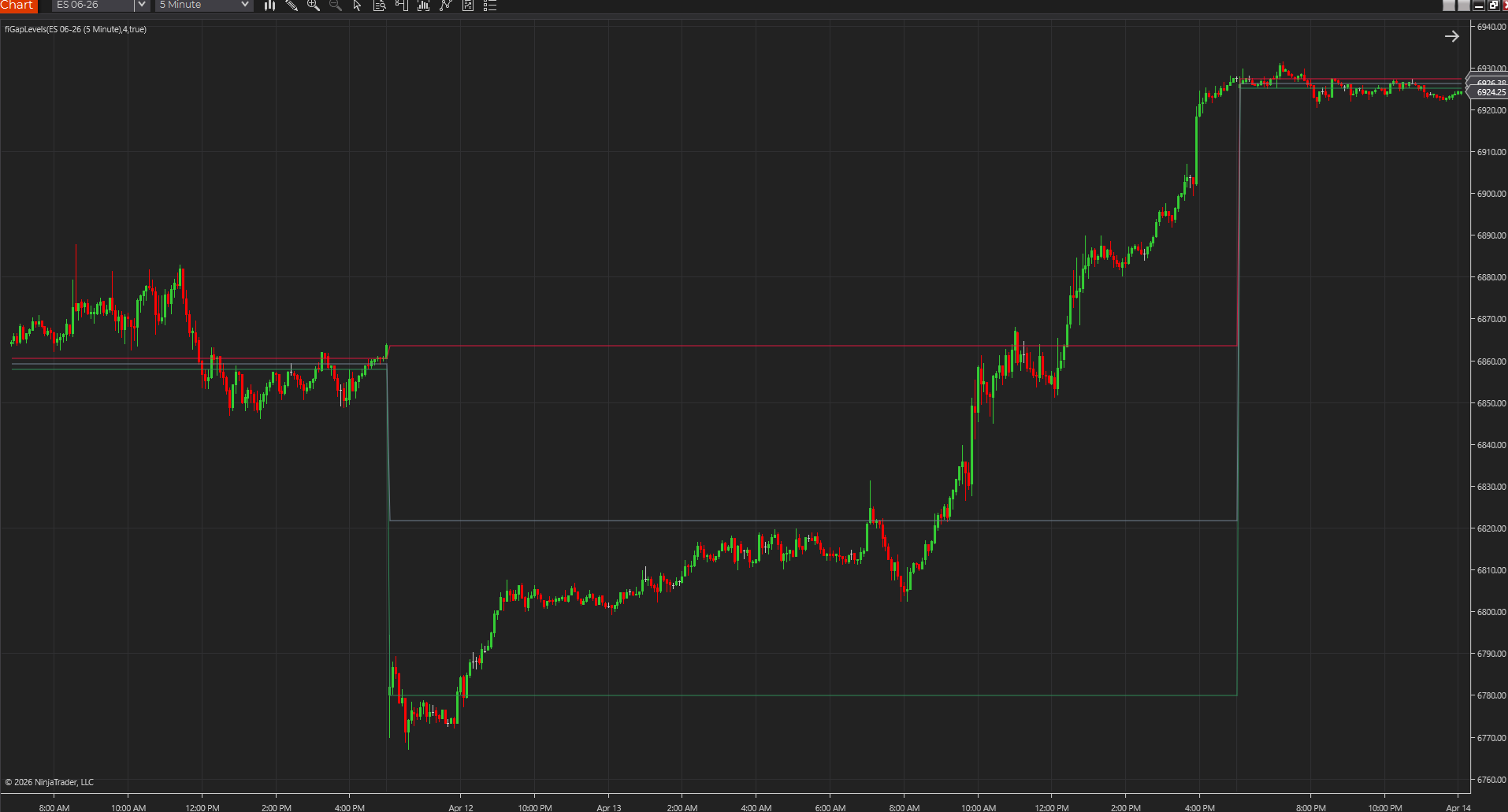
- Gap levels are best when the overnight separation is the main story.
- Prior-session levels are best when you need the broader auction map from yesterday.
- Choosing between them starts with deciding what the open is really testing.
Use gap levels when the overnight displacement matters most
A gap matters because it changes where the session begins relative to prior value. That can create fill, rejection, or acceptance questions that prior-session highs and lows alone do not answer as cleanly.
- Gap levels frame whether the market is honoring or repairing the separation.
- They are especially useful on obvious overnight dislocations.
- That makes them more event-like than general auction references.
Use prior-session levels when the larger auction still controls the read
Prior-session highs, lows, opens, and closes stay useful when the market is still reacting to yesterday's broader structure. They often matter even on days where the gap itself is less dramatic.
- These levels help traders see whether the session is accepting back into prior territory.
- They provide a cleaner map for the broader auction than gap lines alone.
- They are usually the steadier default reference.
The best read often comes from the interaction between them
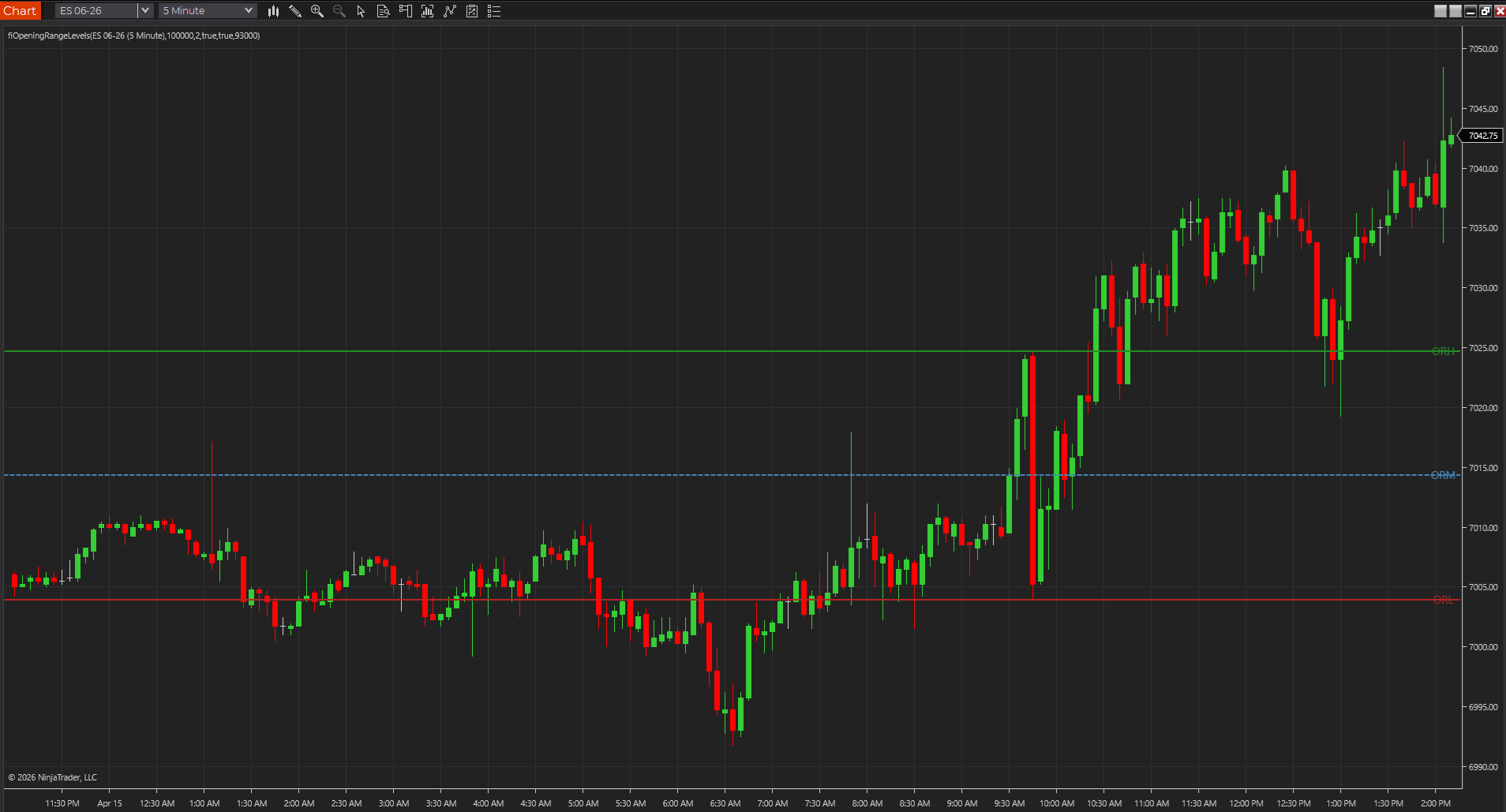
A strong futures workflow often starts with both ideas available, then gives more weight to the one that is actually driving the day. The point is not to keep every line equal. It is to know which frame deserves priority.
- A large gap into prior-session resistance is a different story from a small gap into empty space.
- The lines matter most when they change the opening decision, not when they simply exist.
- That is where the chart moves from clutter toward clarity.
Best next reads
These pages pick up the questions most readers usually have next, so you do not have to back out and start a fresh search.
Frequently asked questions
What is the main difference between gap levels and prior-session levels?
Gap levels frame the separation between the prior close and the new open, while prior-session levels frame the actual auction references from the previous session.
Which is more important for futures traders at the open?
It depends on the day. Large overnight displacement often makes gap levels more important, while quieter opens often keep prior-session references in the lead.
Should both be on the chart?
Sometimes, but only if they answer different questions cleanly enough to justify the extra visual load.