Guide walkthrough
Start reading here
This is the main article body, where the page shifts from summary cards into the actual workflow and decision-making notes.
On this page
Key terms for this guide
These glossary pages cover the ideas and platform language most likely to matter as you work through this guide.
Build around bias first
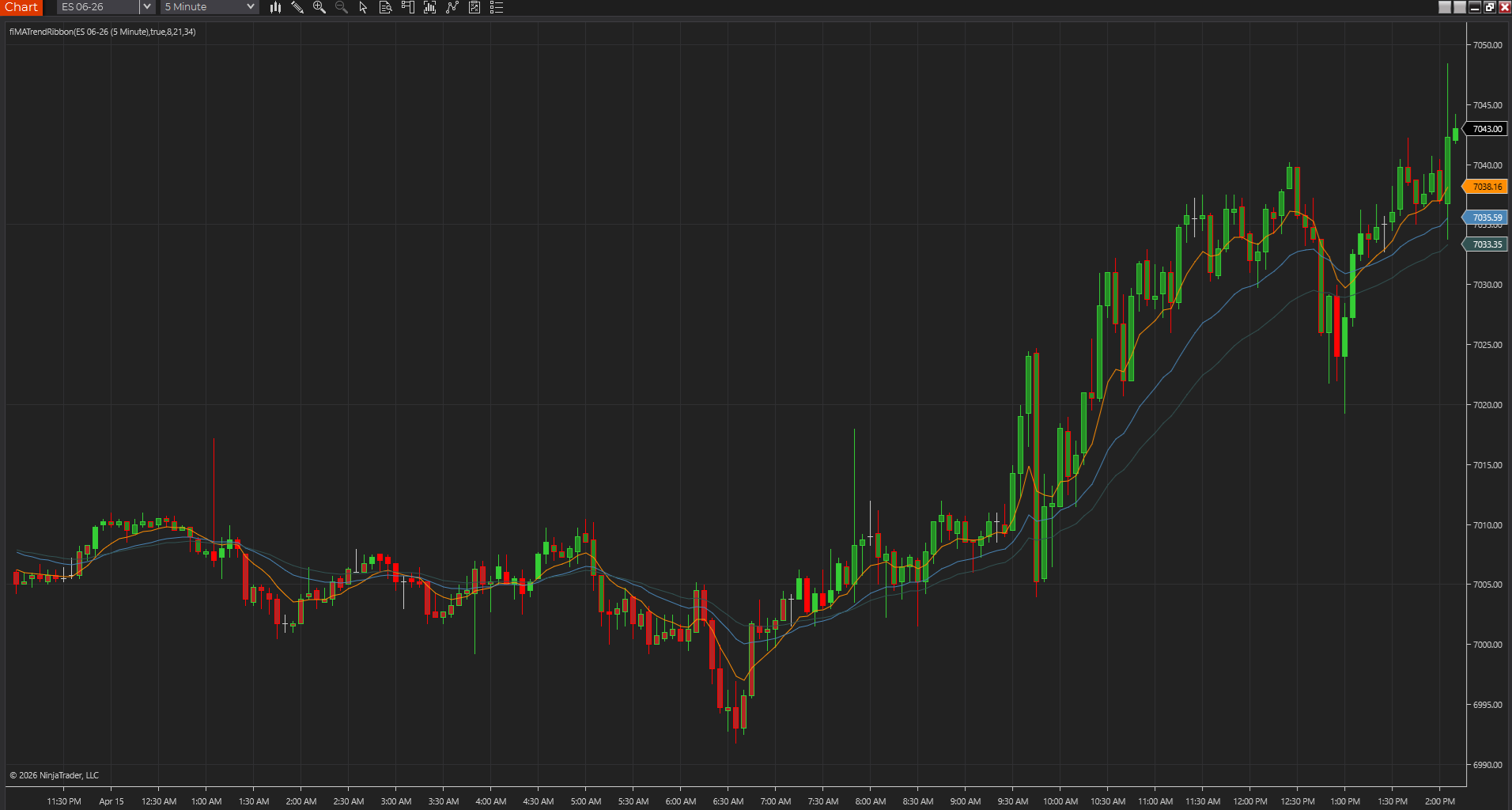
A futures trend-day chart gets better when the first layer answers the directional question clearly. That usually means one trend or structure overlay that keeps the trader honest about the state of the day instead of re-litigating direction on every bar.
- Trend ribbons and clean structure tools help with directional discipline.
- The bias layer should reduce hesitation, not create another argument.
- If the chart still feels undecided after the first layer, the stack is probably not simple enough.
Use VWAP and key levels to judge pullback quality
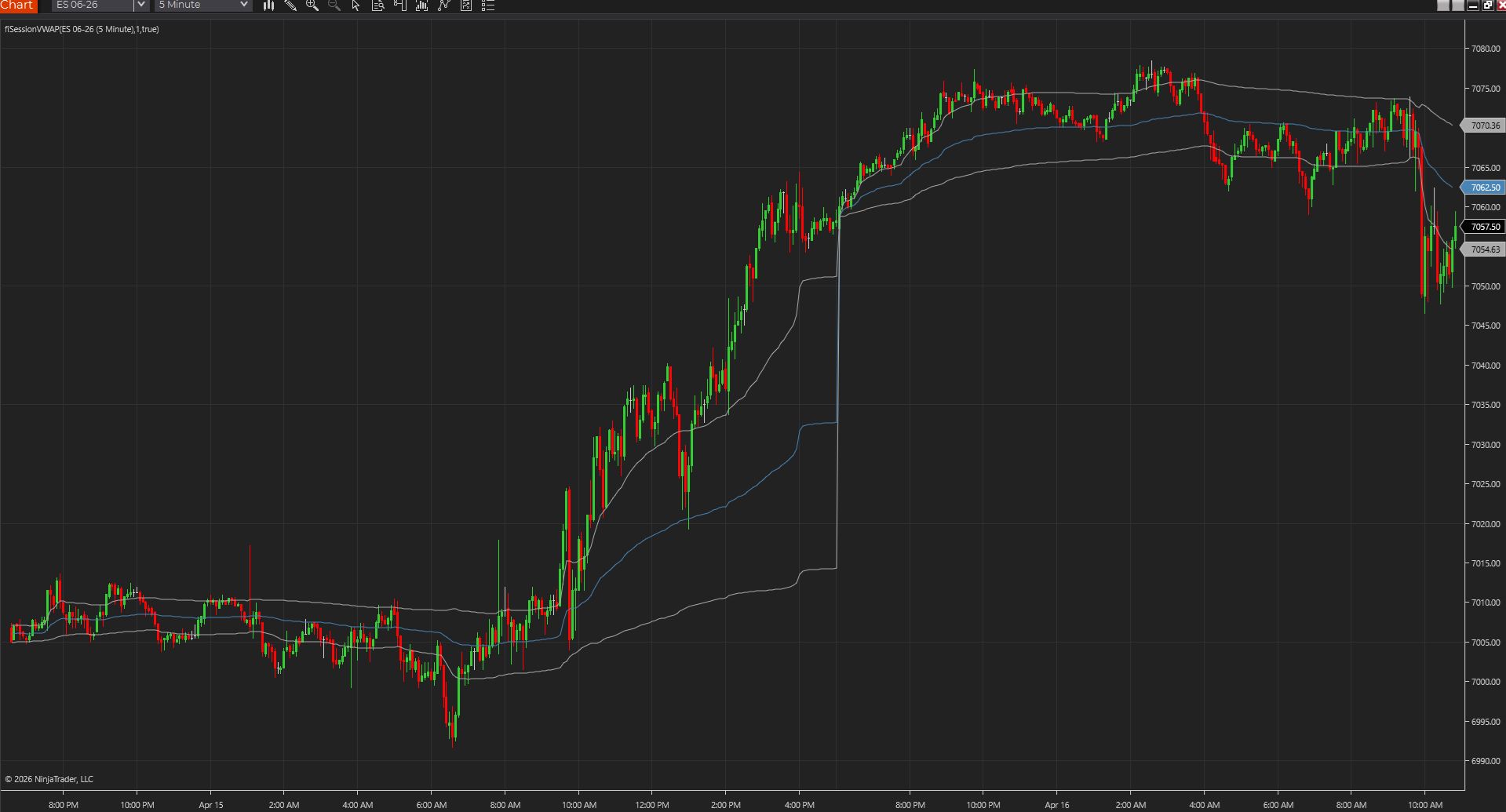
Trend days still need location. The goal is not to predict every reversal but to judge whether the pullback is happening in a part of the chart where continuation still makes sense.
- VWAP helps you judge whether price is stretching too far from value.
- Higher-time-frame or prior-session levels help you see where continuation may get tested.
- Location makes the trend read more believable.
Keep the risk layer visible
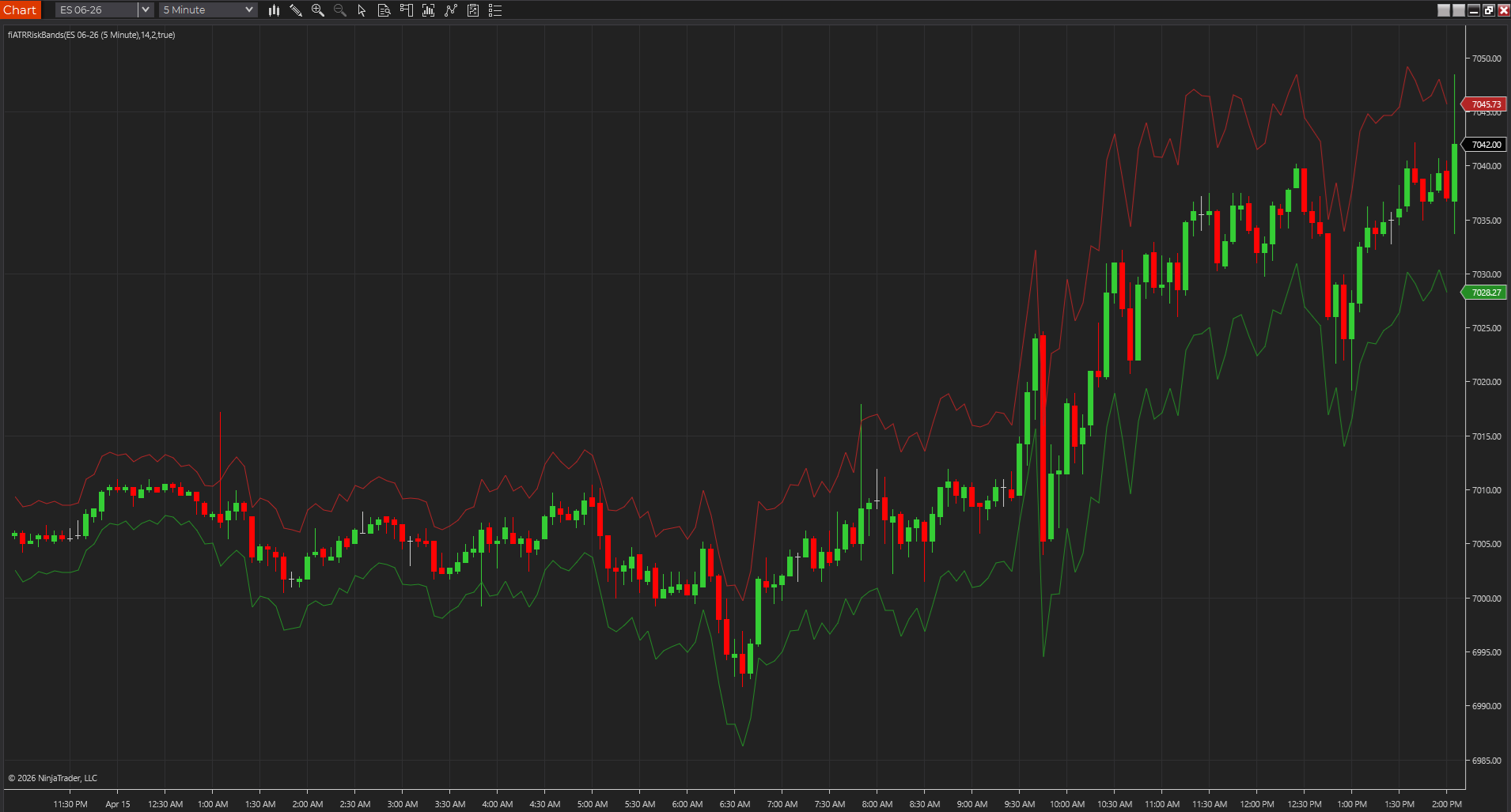
Trend days can feel easy until volatility expands enough to wreck discipline. That is why the stack needs a risk layer that stays visible and practical while the move is in progress.
- ATR-based tools help keep stop distance tied to actual conditions.
- A visible risk layer keeps strong trend days from becoming oversized emotional trades.
- If the stack helps with entries but not with risk, it is unfinished.
Test whether the stack actually keeps you with the move
A trend-day stack earns its place by improving patience and reducing noise-driven exits. Replay or simulator work should ask whether the stack makes continuation decisions cleaner, not whether it predicts a perfect top or bottom.
- Trend stacks should reduce second-guessing during healthy pullbacks.
- The best stack usually improves trade management more than signal drama.
- If every new layer makes the move feel more fragile, it is probably clutter.
A good trend-day stack should make you calmer, not more excited
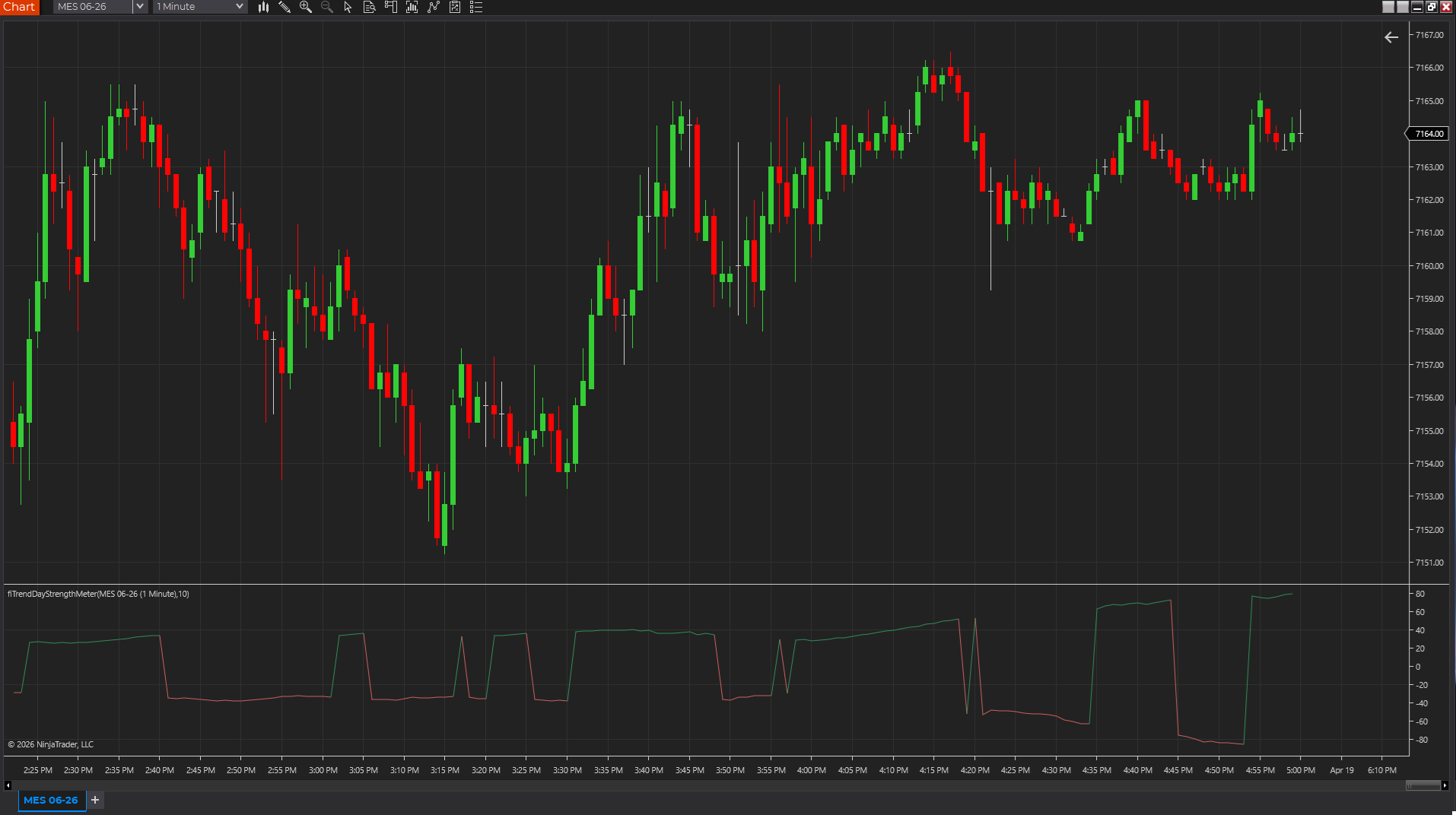
This is a surprisingly useful check because bad trend stacks often create constant emotional urgency. Every ribbon color change, micro-pullback, or small structure shift starts looking like a new decision. A better stack does the opposite. It helps the trader stay aligned with the dominant move and wait for meaningful changes instead of reacting to every wiggle.
- Trend-day tools should reduce emotional churn during continuation.
- If the stack keeps pulling attention toward tiny interruptions, it is probably too busy.
- Calmer trade management is often a sign the stack is actually doing its job.
Best next reads
These pages pick up the questions most readers usually have next, so you do not have to back out and start a fresh search.
Frequently asked questions
What is the core of a trend-day futures chart?
Usually one clear bias tool, one location layer, and one risk layer. That is often enough to stay aligned with direction without drowning the chart.
Should a trend-day stack include breakout markers too?
Only if they add something distinct. If they simply repeat the same directional story, they usually add clutter more than clarity.
What usually ruins a trend-day chart?
Too many layers trying to confirm the same bias. When every pullback triggers a new argument about direction, the chart stops helping the trader stay with the move and starts encouraging over-management.